 BEAT-MEMORY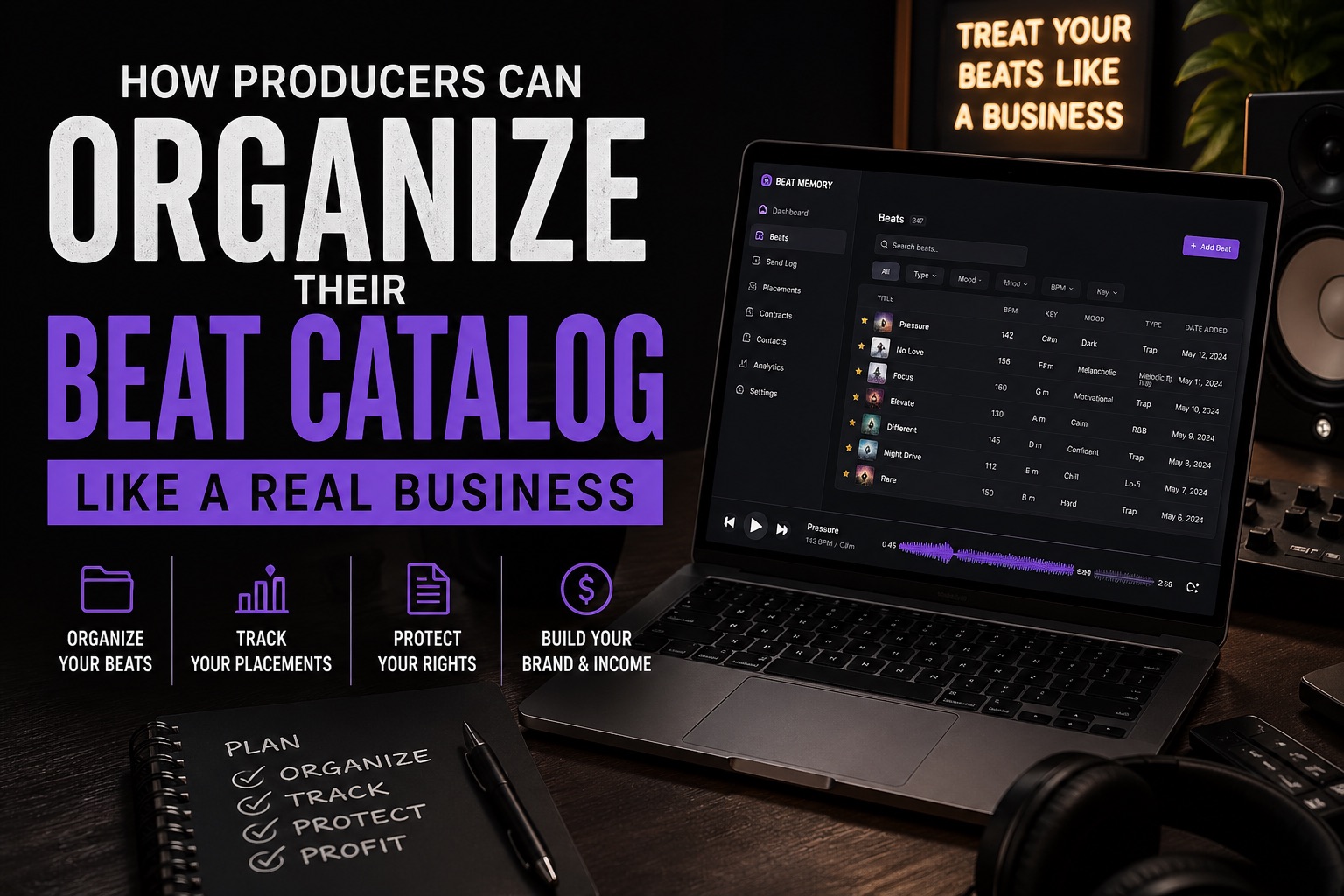
A real beat catalog is not just about where files sit. It is about knowing what each beat is, who has heard it, where it has been pitched, whether a lease exists, and what follow-up opportunities still matter. That is the difference between music files and business assets.
Folders are not enough
Folders can hold audio, but they cannot remember relationship history. They do not tell you whether a specific artist already heard a beat, whether a producer split sheet exists, or whether a pack underperformed last month. As your catalog grows, that missing context becomes expensive.
The core layers producers should track
- Basic beat metadata like mood, genre, BPM, key, and tags
- Artist send history so you know who already received what
- Lease activity and agreement status
- Beat pack placement and pack performance
- Revenue opportunities tied to each beat
Why organization turns into revenue
Most producers do not lose money because they lack talent. They lose money because the business side gets blurry. Beats get sent twice. Follow-ups get forgotten. Files disappear into older exports. Deals stall because there is no clean record of what happened last.
When your catalog is organized, outreach gets faster, studio sessions get smoother, and your catalog starts behaving like a system instead of a pile. That makes it easier to close more leases, build better packs, and move with more confidence.
Think beyond storage
A strong producer workflow is not only about finding a beat quickly. It is about understanding the full lifecycle of that beat after creation. The more your catalog remembers, the less you have to rely on guesswork.
Beat-Memory is built to help producers move from scattered files to a real catalog system with send tracking, lease management, beat packs, and local-first control.
Start Beat-Memory